Dr. Jon Hare to Speak as Featured Guest for Nantucket Maria Mitchell Association Science Speaker Series

Kelly Bernatzky • August 30, 2021

On September 1 at 7pm, the Nantucket Maria Mitchell Association (MMA) is hosting a live lecture presented by Dr. Jon Hare of the Northeast Fisheries Science Center. His talk, “The Comings and Goings of Climate Change - Thinking About Cape Cod’s Marine Ecosystems of the Future” is the last lecture of the MMA’s FREE Science Speaker Series and will be held via Zoom.


Climate change is affecting all aspects of our lives, and the ocean waters of the Northeast are among the fastest warming in the world. The evidence for climate change is overwhelming, and the impacts on marine ecosystems are profound. In and around Cape Cod, southern species are occurring more frequently, both in scientific studies and on fishing lines. Northern species, on the other hand, are declining and moving out of our waters. In addition to warming, oceans are becoming more acidic ̶  a phenomenon termed ocean acidification, which is caused by increased carbon dioxide. Ocean acidification is primarily affecting species with shells, which include clams, scallops, and whelks. From a fisheries perspective, these changes will create challenges and opportunities. Thinking about the future can help prepare us for what is to come.


Jon Hare is the Science and Research Director of the NOAA Fisheries Northeast Fisheries Science Center based in Woods Hole. He has a Ph.D. in Oceanography from the State University of New York at Stony Brook and has worked for NOAA for more than twenty years. Hare grew up in upstate New York and developed his passion for fishing and the ocean during summer vacations on Martha’s Vineyard. He spent the early part of his career in the Southeast working from North Carolina to Louisiana. He moved to Rhode Island in 2005, and finally found his way back to Cape Cod and his current job in 2016. He oversees science activities related to the NOAA Fisheries mission in the Northeast region including fisheries, aquaculture, wildlife protection, habitat conservation, and ecosystem science. He also works to build regional science collaborations to address complex issues including climate change, offshore wind development, and watershed science.


To register for this event, please follow the link below:

https://us06web.zoom.us/webinar/register/WN_vLuFyHqpRsStKbHZ4PmeuQ


To view the recordings from our Science Speaker Series lectures in Summer 2021, please follow the link below:

https://www.mariamitchell.org/science-speaker-series


This series is generously presented by our lead sponsor, Bank of America, and additional sponsors, Cape Air, Cisco Brewers, and White Elephant Resorts.


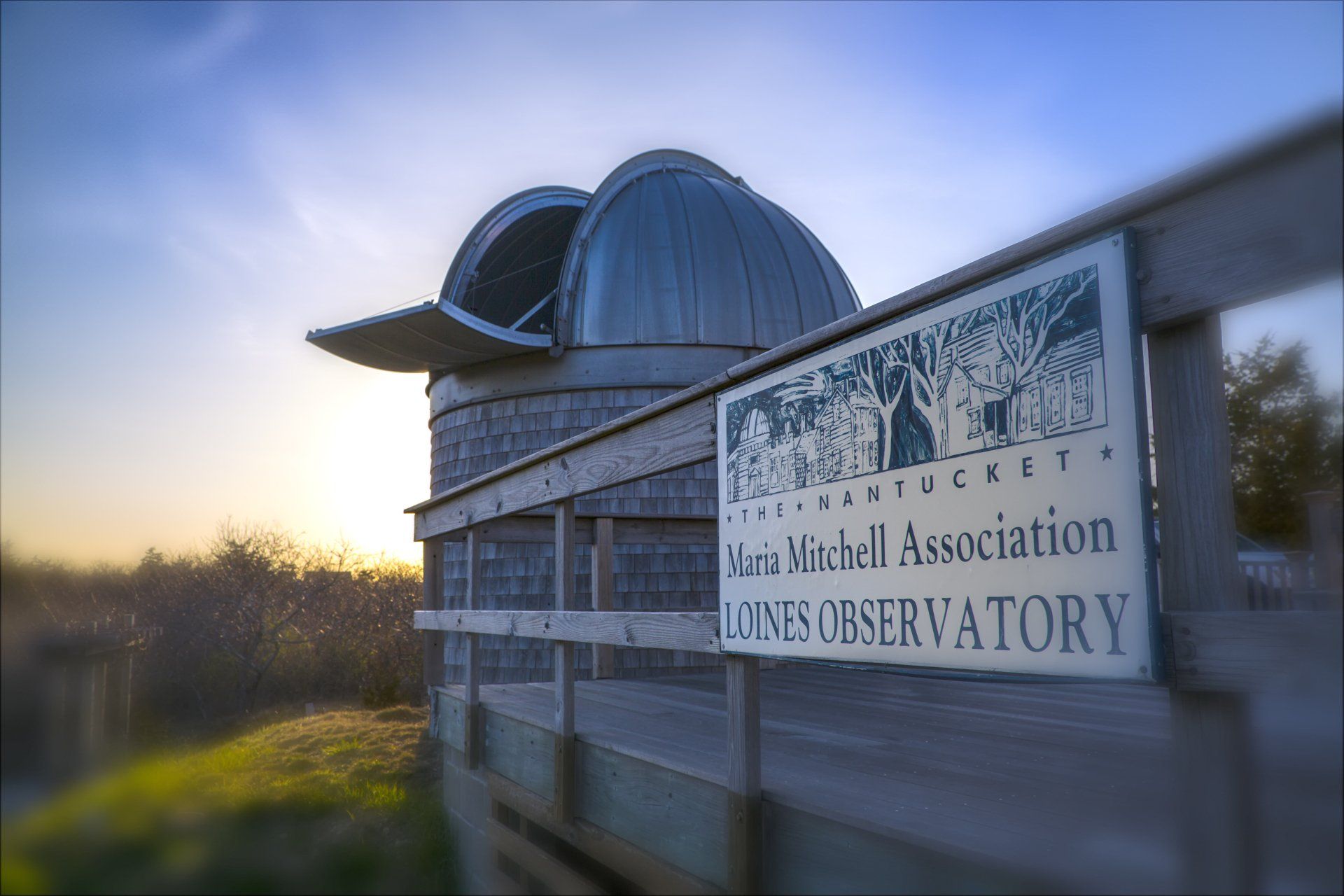
The Maria Mitchell Association is a private non-profit organization. Founded in 1902, the MMA works to preserve the legacy of Nantucket native astronomer, naturalist, librarian, and educator, Maria Mitchell. The Maria Mitchell Association operates two observatories, a natural science museum, an aquarium, a research center, and preserves the historic birthplace of Maria Mitchell. A wide variety of science and history-related programming is offered throughout the year for people of all ages.

For Immediate Release

August 30, 2021

Contact: Kelly Bernatzky, Development Associate

kbernatzky@mariamitchell.org

Recent Posts

December 1, 2025
“If you don’t look, you don’t see. You have to go and look.” -Edith Andrews
By Jascin N. Leonardo Finger December 1, 2025
A past blog that I forgot I had written when I came across the letter written about below. Once I realized I had already written a blog about it, I decided it was worth re-blogging. Over Christmas, a neighbor of my Mother’s gave her a copy of something she came across while cleaning things up in her house. She thought my Mother would enjoy it and by the same token, my Mother thought that I would. Her note with it stated it proved she was as, “old as dirt.” She isn’t old as dirt. Believe me. The letter she had copied was from the War Production Board and dated December 16, 1942. It was, “written at the request of President Roosevelt,” who wanted to thank this young girl for her donation of a rubber tire. This was not any old rubber tire you see. It was a pure rubber tire – very much needed for the war effort – from one of her toy airplanes and measured not more than half an inch or so in diameter. This young girl was distressed that everyone else, including in her family, was assisting in the war effort and that she wasn’t. So when she discovered the tire was rubber, she asked her mother to send it to Washington, DC. Which, obviously, her mother did do. What does this have to do with Maria Mitchell you wonder? Well, it makes me think of collections and saving things. You have your own collections and archives at home – your family papers and photographs, your books (aka special collection books). These are valuable to your family and its history. They help you see what and who came before you and how your family became a family. What they endured. How they got to where they did and how where they came from helped, in part, to get you to where you are today. And then, these papers and books are important for the larger community. We learn from our past and our collective past – and these items help us do that. Scores of researchers use Maria Mitchell’s papers and those of her family every year. Not everyone is doing research on the family – they can be doing research on astronomy or some science-related matter, someone whom Maria or her family knew. The possibilities are endless. So, from this little letter, I know a young girl in Connecticut contributed to the war effort and what she gave. I know that rubber (not that I didn’t already but you get the idea) was important to the war effort in some way. I also know that many people contributed to the war effort and this was just one simple way to do it. I know she had a toy that had rubber components. And as a young girl in 1942, she was playing with toy airplanes. And I know that the war effort was all consuming to the point that a small child wanted to make sure she found a way to help too while seeing her family members helping. Your paper is important. Always find a venue for these items if you no longer want them. They will help us to better understand our world – past and present. JNLF P.S. Remember that every donation, every gift to someone in need, matters. No matter how small it is – or you think it is.
By Jascin N. Leonardo Finger November 24, 2025
Nov. 15, 1876. Congress. The Woman’s congress met in Philadelphia. The papers were numerous and excellent. Mrs. Howe’s on paternity the most successful. Grace Anne Lewis, ABB [Antoinette Brown Blackwell], Mrs. Diaz [Abby Morton Diaz], Mrs. Perus and others had very good papers. The newspaper treated us very well. The institutions opened their doors to us, the centennials gave us a reception. But – we didn’t have a good time! 1 st . The Hall was a very bad one to speak in, almost no one could be heard. 2 nd . The Women’s committee of Philadelphia led by Mrs. Bartol, attempted to control us . . . Several women protested via passed note to Maria Mitchell that they did not want to discuss suffrage for women at the Congress. Really? Why were they even there then? Apparently, they were afraid (I can see that). Ultimately, papers were presented and discussed concerning women’s suffrage. They even had people oppose the nomination of Julia Ward Howe as President. A small group of women offered up other nominations with one finally saying that the new president needed to be from the west, implying there was too much northeast representation on the board. Maria was not pleased in the least. Ultimately, Julia Ward Howe became President. JNLF
Show More