MMA Astronomy Intern Wins Prestigious Chambliss Astronomy Achievement Award

Logan Gomes • April 7, 2023

NANTUCKET, MA—The Nantucket Maria Mitchell Association (MMA) congratulates summer 2022 National Science Foundation Research Experiences for Undergraduates (NSF-REU) intern, Anavi Uppal, on winning a prestigious Chambliss Astronomy Achievement Student Award at the winter American Astronomical Society (AAS) meeting in Seattle, WA that took place January 8-12, 2023.


At this 241st meeting of the AAS, Uppal presented her summer research on a poster entitled, “Using Astrometric Jitter to Find Recoiling AGN Candidates in Optical Imaging Survey Data." This research represents an important step in preparing for the building of the new Vera C. Rubin Observatory, which will begin its large Legacy Survey of Space and Time (LSST) and perform deep observations of the southern sky for the next decade. “I created a new, quicker way to identify recoiling AGNs, which are supermassive black holes that have been launched out of the center of their galaxies. Previously, less than a dozen of these objects have been found, and studying more of them will help us understand how galaxies and black holes co-evolve,” Uppal said, describing her research work. 


Uppal was mentored by the MMA Affiliated Astronomer, Dr. Suvi Gezari and Director of Astronomy, Dr. Regina Jorgenson. Typically, approximately 350-400 students participate in the Chambliss Award competition, and this year there were eleven undergraduate Chambliss Medal recipients. “It was a pleasure to work with Anavi this past summer and I could not be more delighted that her innovative work was honored by the AAS in this incredible way. I’m happy to report that Anavi has been continuing her research with me and we are preparing for an observing run at the Keck Observatory in Hawai’i in June to follow up some of her exciting recoiling supermassive black hole candidates,” Gezari said.


Uppal is currently a junior at Yale University where she is majoring in Astrophysics with a minor in Computer Programming. She will be participating in the University of Hawai’i REU program this coming summer and will be applying to graduate astrophysics Ph.D. programs in the fall.


Of her experience with the MMA Uppal said, “Going to the AAS conference was incredible! I met so many great scientists and heard about fascinating new research. I’m grateful to the MMA NSF-REU program for an incredibly fun summer research experience and invaluable career guidance.” 


The MMA NSF-REU interns have won the prestigious Chambliss Award in each of the past five AAS winter meetings, a testament to quality of the MMA’s astronomy internship program. Approximately 90% of MMA astronomy interns have gone on to astrophysics Ph.D. programs.


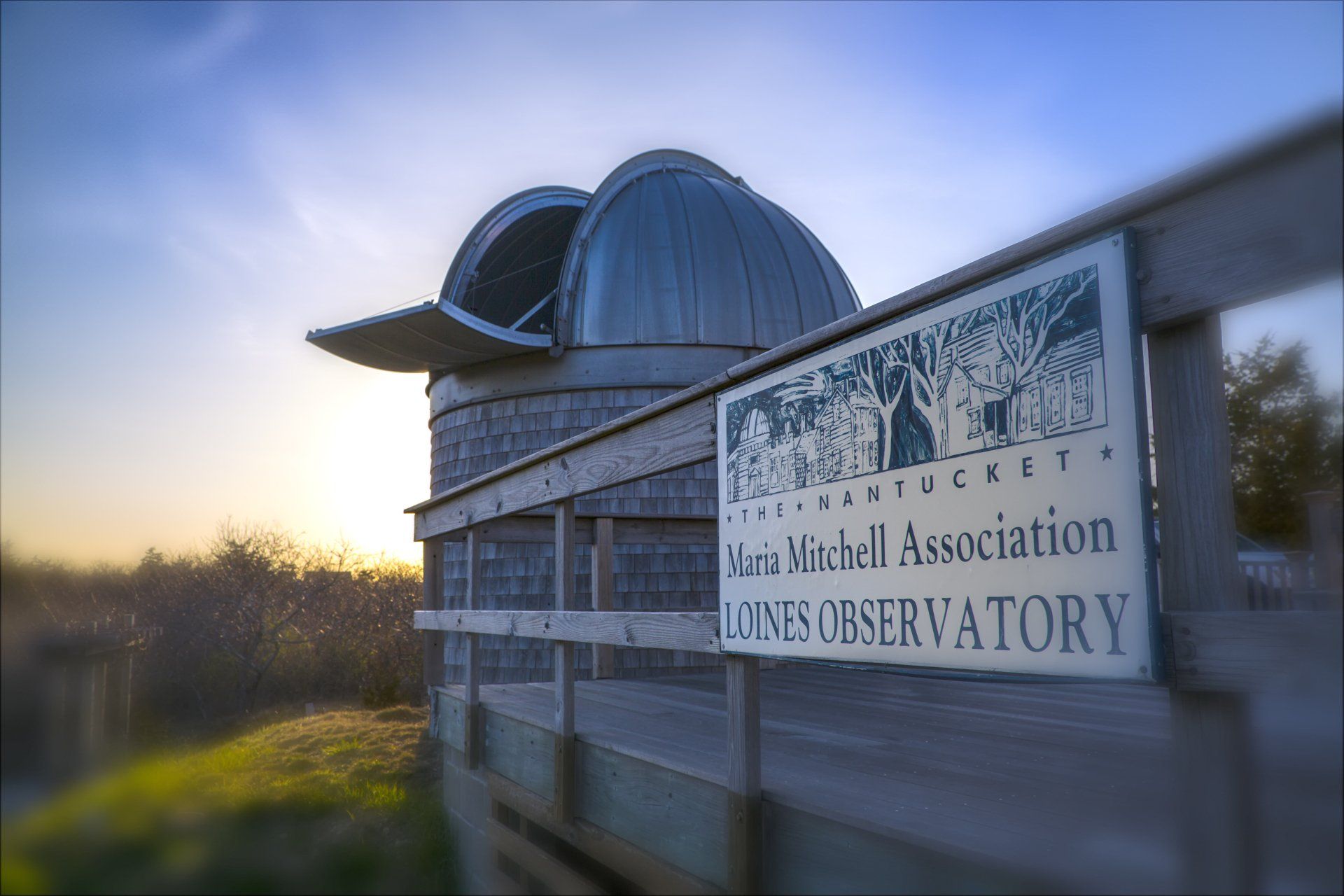
The MMA, via its Maria Mitchell Vestal Street Observatory, operates the NSF-REU program each summer and has done so for decades. The program is funded by a generous grant from the National Science Foundation. Six students are selected out of a pool of approximately 300 undergraduate student applicants from around the United States. The NSF-REU interns come to Nantucket for ten to twelve weeks during the summer to participate in astrophysics research projects. While on Nantucket, the NSF-REU interns also participate in the outreach efforts of the Observatory – primarily by hosting twice weekly Open Nights at the Loines Observatory.


The Maria Mitchell Association is a private non-profit organization. Founded in 1902, the MMA works to preserve the legacy of Nantucket native astronomer, naturalist, librarian, and educator, Maria Mitchell. The Maria Mitchell Association operates two observatories, a natural science museum, an aquarium, a research center, and preserves the historic birthplace of Maria Mitchell. A wide variety of science and history-related programming is offered throughout the year for people of all ages.


###

For Immediate Release

April 7, 2023

Contact: Logan Gomes, Director of Advancement

lgomes@mariamitchell.org

Recent Posts

By Jascin N. Leonardo Finger May 18, 2026
A repost from long ago – because I still like a good chair. Quite awhile ago, I wrote about some of my collection addictions, including pottery shards, 19 th century kitchen mirrors, and of course, enamelware. Well, here is another one for you. I love chairs. Yes, this is another collection addiction of mine. But not all chairs – chairs from the eighteenth and nineteenth centuries. Typically, I like plain, simple wood chairs with a horizontal piece or two of wood for the back and a plain, thick wood seat. Simple, not a lot of turns to the wood, and not a lot of decorative features or paint. Several years ago, I had a meeting at the home of the leader of a group I was working with. She owned the Obed Macy house, very much untouched and quite a remarkable house. Yes, Obed was the Nantucket historian (among other things), as well as the son of island entrepreneur Judith Macy, and the nephew of the island “she-pirate” Kezia Coffin. We met outside on the side porch which was a late 19 th century addition to the house and one that certainly reflected what life was like in the period it was added to the house. The owner had brought out every chair in her home. I was on a chair high (not a highchair!) – here I had my choice of nineteenth chairs to sit on. Since I was one of the first to arrive, I took my time picking out which chair I was going to sit on – I kid you not. I was like Goldilocks − though I was grown-up enough not to sit on every chair to decide which one I was going to claim for the meeting! I went on and on and likely on and on about all these lovely chairs to her. Unfortunately, the day came several years later when she was faced with having to sell her beloved home to move off-island. She called me. She wanted to know if I wanted any of her chairs since she remembered how much I went on and on about them. It was a mixture of emotion because losing this island resident was a loss for the island and for its history and historic architecture. I went to her home a few days before she was going to have her sale and helped her move items from the house out onto the lovely 19 th century side porch where I first reveled in her chair collection and also out into the large, simple backyard that looked like it too had not been touched since the 19 th century. She told me to take whichever chairs I wanted as she wanted me to have them. Depressing. I told her I would not take but that I would buy. We had a little back and forth but she finally relented. Then, I had to choose and it was quite agonizing. Not wanting to be a chair hog, I limited myself. I now have two matching and two others sitting around my dining room table made from salvaged Nantucket pine floorboards. We refer to them as “Helen’s chairs” – their previous owner. She likely found them here on Nantucket; one or more may have even come with the house when she bought it. We eat every meal sitting in them, spend time with our family in long discussions and laughter sitting in them, and each time I sit, touch, dust, or move them, I think of Helen and the house these chairs once sat in and the conversations and people they must have witnessed over the many years. A simple wood chair – a witness to history and time. JNLF
By Jascin N. Leonardo Finger May 11, 2026
A repost – with my apologies – from last year. It started budding the week of April 30 this year. This is what our landscaper for the MMA calls it. “The ancient vine.” He tells the people who work for him not to touch the “ancient vine.” I have probably made him – and all of them – terrified of it. I am even terrified of it to some degree. I refer to the grape vine behind the Mitchell House that is supposed to be Peleg Mitchell Junior’s grape vine – Maria Mitchell’s uncle who inhabited the house from about 1836 to his death in 1882. It has two trunks but one died several years ago. Because of that, each year I try to root shoots. It’s fairly easy to do – when you cut back the vine in late fall/early winter. I have had success but not success protecting the shoots I baby all winter from bunnies and other critters once I plant them – try as I might. I started doing this when the one trunk died – I was PANICKED! The landscaper stays away because I have told him if anyone is going to accidentally harm or worse yet, kill, this grape vine it would be me so I only have myself to blame. So each November/December – once ALL the leaves have fallen off – I climb my ladder and quietly, carefully, and fearfully cut back the stems typically to two buds. I have been somewhat successful in spurring grape production – and these grapes attract some amazing birds in the fall. It takes me some time – and I pretty much hyperventilate the entire time – and then, I stare at it all winter. Passing under it multiple times a day to reach my office. Hoping, and yes, praying, it will come out in the spring. It’s a late budder so just recently the buds started to show themselves – thank goodness! – and I was rewarded today (May 5, 2025) with this wonderful hot pink color on the edges of the leaves as they are uncurling. JNLF
By Jascin N. Leonardo Finger May 4, 2026
May 6, 1878 Between the clouds, Miss Spalding obtained 7 photographs of Mercury on the Sun. It is comfort to me to be able to plan and do a new kind of work. The large telescope worked better than usual, Clark having just been to the Observatory. Clark, as in Alvan Clark, a man who would become the premier telescope maker in America and who built Maria Mitchell’s 5-inch Alvan Clark refractor that she purchased from him (after working with him to build it per her specifications) with money gifted to her from “The Women of America” led by Elizabeth Peabody. More than likely, it is this telescope she is referring to as she did use it in the Vassar College Observatory with her students – and it is also taking center stage in photographs, along with her (first her father’s) Dolland telescope.  Maria had decided she would photograph the Sun on every clear day, and this was one of those results. She would use these images, with her students, to study sun spots and their changes. With her students, Maria would photograph the transit of Mercury as noted above. She would also photograph the transit of Venus a few years later with her students. JNLF
Show More