My – And Our – Responsibility

Jascin N. Leonardo Finger • June 8, 2020

God gave Noah the rainbow sign, no more water, the fire next time!

– James Baldwin


That line – taken by James Baldwin from a spiritual, or slave song, has haunted me since the day I read it many years ago. It is seared upon my consciousness. In the last few years, and in particular the last week or so, it is a throbbing constant churning over and over again in my head. Are we headed for the fire? Are we in the fire? What would Baldwin, one of my favorite writers, think of us now?


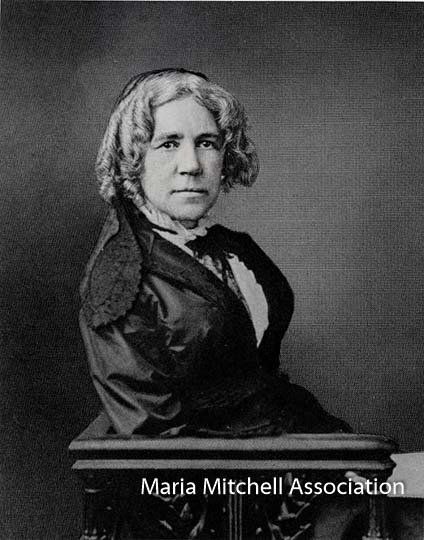
I often think about what Maria Mitchell would think of certain situations. Maria Mitchell was a Quaker. She believed that all people were equal. The women’s rights movement – at least initially – was closely tied with the slaves’ rights movement. Unfortunately, a schism developed within this movement. Maria remained in the camp of all or nothing – meaning that they would fight for the universal rights of all. In fact, she turned down speaking at a meeting of “the other side” – she turned down Susan B. Anthony. And frankly, I’ve always been pretty proud of her for that.


Colour is not a human or a personal reality; it is a political reality. 

James Baldwin


It’s always hard to place a person of the past in a present day context for a myriad of reasons. She doesn’t have the benefit of history – seeing what she missed and learning from it. She did make comments in her journals and letters about the sickness she felt traveling in the South before the Civil War. I believe she would have spoken out in some form. She would have supported her students of all walks of life. I believe she’d be shocked at where we still are. That people continue to be brutalized and ill-treated based on their gender, their sexual orientation, their religious beliefs, their skin color. I believe she would be disappointed. I believe she would be deeply saddened.


Her family members were also at the forefront of fighting for the rights of all. Her brother left his wife and daughter behind on Nantucket to travel to the South to work on behalf of the Freedmen’s Aid Society during and after the Civil War. And later, he would be a founding faculty member of Howard University.


My connection and hurt during this time runs even deeper than history. If you do not know me or my family, then you do not know that we are a transracial family. My husband and I are white. Our son is African American, Haitian, and Korean. We became a family at his birth. Before my Father passed away, he said continually to my Mother about what was happening in the country, that, “We are going backwards.” He was, unfortunately, right. It seems like it is getting worse.

It demands great spiritual resilience not to hate the hater whose foot is on your neck, and an even greater miracle of perception and charity not to teach your child to hate.

– James Baldwin

I’m not going to write this eloquently – there is too much emotion involved. There is sadness, anger, fear, hysteria. I see what has happened – especially in the last few months – and I have flashes of what life will be like for my son. Sure, I can protect him now but I have found myself already having “the talk” with him – starting even before the age of six. And, as a white woman, it has not been easy. I have lived in white privilege. Any interactions he witnesses are within this privilege. Just think of what my experience might be when stopped by police compared to one of our African American friends. He witnesses my interaction – not theirs. And as a full-of-life little boy – and one who doesn’t stop at, “Stop!” – my fear is ever more increased. He is surrounded by people from all walks of life – different shades, different sexual orientations, different religious beliefs. His “uncle” is an African American man raised in Mississippi who has had horrific experiences and unfortunately continues to have them. My son’s “uncle” will also be relied upon to help us work with our son to have him better understand the unfortunate world we live in – his words may and will resonate better with my son than those of his white parents. I truly hope, plead, beg that the world we live in will be different by the time he is a teenager but history has shown it differently. It makes my stomach twist in agony, fear, and anger.


Whoever debases others is debasing himself.

– James Baldwin


I know that I will use Baldwin’s words with him. His bookshelf is already groaning with books by Baldwin, Ta-Nehisi Coates, John Lewis, J. Drew Lanham, and others – mentors on paper. This is in addition to what I have been able to find in picture books – frankly, not an easy task. Books and quotes don’t do it – but they are a start and something I have been using and will continue to use as my husband and I – and our village – try to show him the way, arm him with the tools and knowledge he needs to protect himself and others, and as we try to make this world better for him. Perhaps that sounds trite but that’s all I can do. As the mother of a child of color, I can’t breathe. I won’t breathe either until the day I die – or the day this world is finally equal and a young black man or woman can walk down a street or go for a run – NOT in fear.

Please try to remember that what they believe, as well as what they do and cause you to endure does not testify to your inferiority but to their inhumanity.

– James Baldwin


The step, however small, which is in advance of the world, shows the greatness of the person, whether that step be taken with brain, with heart, or with hands .

Maria Mitchell


JNLF

Recent Posts

By Jascin N. Leonardo Finger February 2, 2026
Maria Mitchell once said, “When I see a woman sew, I think, what a capacity she has for using a micrometer!” So, maybe what I am about to write would be a bit disappointing to her. However, I believe she was likely pleased by what sewing circles on Nantucket could accomplish for her fellow Nantucketers. As, the great-granddaughter of a milliner and extremely talented seamstress (she hand-smocked about twenty dresses for me when I was an infant and did all of that with rheumatoid arthritis!) and the granddaughter of two talented women of sewing and needlework, my apologies to Maria . . . . The sewing circles that arose on Nantucket in the nineteenth century were formed in part because of the Great Fire of 1846, which, along with the demise of whaling and the lure of the Gold Rush, helped to bring about an economic depression that would last decades and cause Nantucket’s population to decrease from its height of around 10,000 in the 1830s to fewer than 2,000 people by the late nineteenth century. The sewing circles helped struggling families by providing them with clothes, food, and even paying their rent. Many of the organizations rose from within the churches of the island and all were founded, managed, and run by women. The Ladies Union Circle of the First Congregational Church, established in 1846, was followed by similar groups, such as the Unitarian Sewing Society and the Ladies Wesleyan Society of the Methodist Episcopal Church, both established in 1850. The women gathered together to create, sew, and sell their creations to raise money for those in need and for their own churches. The groups not only generated the money to help others; they also provided a social venue for those who remained on Nantucket and witnessed the quickly deteriorating social fabric of their island home. The societies served as a positive network and support group for their members. The women’s activities, accomplished many good deeds, and one group, the Unitarians, was even able to purchase a parish house for the church with funds they raised – no small task. Additionally, the sewing circles gave rise to other groups that many islanders heavily relied upon in the nineteenth century: the Relief Association, the Children’s Aid Society, and the Ladies Howard Society, which could date its beginnings to the era of the American Revolution. The Relief Association is still in existence today; assisting island families in need. The act of helping your fellow islander is something that has been a constant on Nantucket, back to when the first English came to the island to settle in 1659. Some of it is born of the isolation of the island, but it is largely that the island is akin to one big family and that is what you do, you take care of your family. JNLF
By Jascin N. Leonardo Finger January 26, 2026
January 18, 1858. Before I left Marseilles I took a carriage and with Miss Shepard and the Hawthorne children visited the best parts of the city and then the seaside . . .On Sunday morning {January 17} at 8 o’clock we left Marseilles for Genoa and Leghorn, uncertain what our further destination would be. Mr. Hawthorne’s indecision is so great that the termination of our journey together is very uncertain . . . I have noted before that Maria Mitchell would travel through parts of Europe with Nathaniel Hawthorne, his wife, Sophia Peabody Hawthorne, and their children. She expressed her frustrations with Hawthorne – as you can see above – in multiple ways. Further on she notes, that if he had been, “as agreeable in conversation as he is in writing“ which gives you a deeper insight. Here was America’s first woman astronomer getting an intimate experience with the Hawthorne family. She did become quite close to Sophia and the children and I have noted before, Maria would act as their impromptu governess or teacher. Hawthorne was finally swayed in making a decision when his daughter, Una, noted that both Maria and Miss Shepard desired visiting Rome as did she. JNLF
January 13, 2026
NANTUCKET, MA— The Nantucket Maria Mitchell Association (MMA) welcomes Dr. Elizabeth (Betsy) Sherman, MMA’s Marine Senior Science Advisor, for a discussion on what the most recent data from the MMA’s harbor monitoring buoy tells us about the health of Nantucket Harbor and the biodiversity we are working to protect. This event is free and will be held via Zoom on Wednesday, January 21 from 7 – 8:30pm. During the presentation, Sherman will share update highlights on what high-frequency buoy data reveals: short-lived events; repeated excursions beyond biological thresholds; and the sequencing of changes across oxygen, temperature, pH, chlorophyll, salinity, and nitrate—patterns that are often invisible in grab samples collected days or weeks apart. She will also summarize progress on cross-platform integration – enabling buoy data to be compared with other local monitoring efforts and used to flag conditions that warrant closer attention and guide future questions. Dr. Elizabeth (Betsy) Sherman is Senior Marine Science Advisor at the Maria Mitchell Association (MMA), a role she assumed in summer 2025. In this position, she has shaped the MMA’s Nantucket Harbor buoy program into a rigorous, decision-relevant monitoring effort focused on harbor biodiversity. She established verification procedures for continuous sensor measurements, cross-checked buoy data with other regional monitoring records, and strengthened data collaboration with partner organizations. She also advises on program design and provides public outreach talks that translate sensor records into ecological meaning. Dr. Sherman’s work leverages continuous buoy data to address ecological questions that grab sampling rarely resolves, including how often conditions cross biologically meaningful thresholds, how short-lived events accumulate, and how multiple stressors interact across temperature, oxygen, pH, and nutrients. Her analyses have identified recurring temperature patterns consistent with sublethal stress, clarified nitrate dynamics in collaboration with Nantucket’s Natural Resources Department, and kept pH research focused on impacts to eelgrass, bay scallops, and the broader harbor community. Dr. Sherman is Professor Emerita of Biology at Bennington College, where she spent more than four decades teaching and conducting research. Her scholarship focused on environmental physiology, evolution, and behavior in freshwater and marine systems, with a long-standing emphasis on coral reef biology. Her peer-reviewed publications span thermal tolerance and climate stress, amphibian physiology and disease, and coral reef dynamics. She also held a long-term appointment as a Visiting Scientist with the Cayman Islands Department of Environment and founded several field-based learning programs, including the Bennington College Coral Reef Project. She earned a B.A. in Biology, High Distinction, from the University of Rochester; a Ph.D. in Zoology, High Distinction, from the University of Vermont; and completed postdoctoral research in Neurobiology and Behavior at Cornell University. A central theme throughout her career has been strengthening public understanding of science and its role in civic life through education consulting and extensive public speaking across New England. Her work has been supported by numerous awards and grants, including multiple grants from the National Science Foundation. This event will be held via Zoom. Pre-registration is required. To register for the free, virtual event, use the registration link: https://us06web.zoom.us/webinar/register/WN_JYOohlUpRkG-WQBDmIQ6QQ The Science Speaker Series is generously sponsored by the Maria Mitchell Association’s lead sponsor, Bank of America. The Maria Mitchell Association was founded in 1902 to preserve the legacy of Nantucket native astronomer, naturalist, librarian, and educator, Maria Mitchell. After she discovered a comet in 1847, Mitchell’s international fame led to many achievements and awards, including an appointment as the first professor of astronomy at Vassar College. Maria Mitchell believed in “learning by doing” and today that philosophy is reflected in the MMA’s mission statement, programs, research projects, and other activities. The Maria Mitchell Association operates two observatories, a natural science museum, an aquarium, a research center, and preserves the historic birthplace of Maria Mitchell. A wide variety of science and history-related programming is offered throughout the year for people of all ages. ###
Show More