
Nantucket Maria Mitchell Association Hosts Miss Mitchell Comet Party
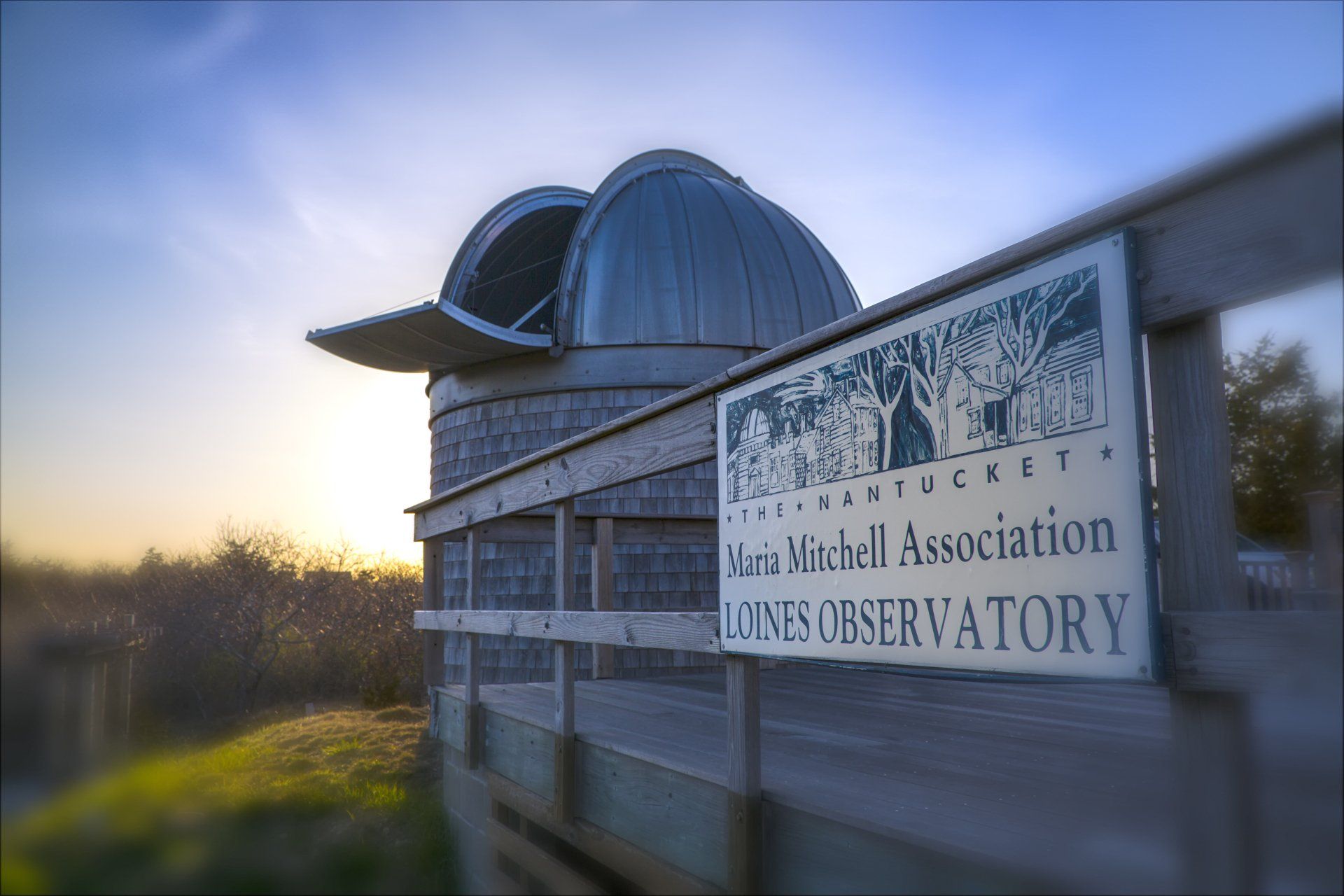
NANTUCKET, MA—The Nantucket Maria Mitchell Association (MMA) announces the upcoming 177th anniversary of Maria Mitchell’s discovery, a comet that was subsequently named C1847V1, on October 1, 1847. The MMA will celebrate by hosting Miss Mitchell’s Comet Party at Loines Observatory, 59 Milk Street Ext. on Saturday, October 5 from 7 – 9pm. Tickets are available to the public for $25 and can be purchased here:
https://112458a.blackbaudhosting.com/112458a/Miss-Mitchells-Comet-Party
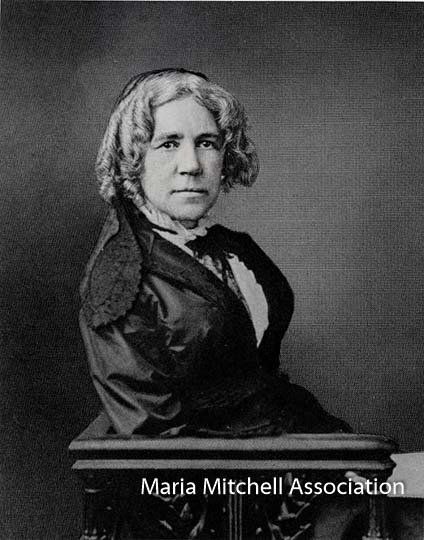
On the evening of October 1, 1847, Maria Mitchell (1818-1889) climbed to the rooftop of the Mitchell family home, then located at the Pacific Bank where her father, William Mitchell, was cashier. This was her nightly regimen, but it was not to be an ordinary night. On that cool evening, Maria swept her telescope across the sky and noticed something that did not belong. It was a comet. Confirmation from her father and then their friends, the Bonds at the Harvard College Observatory, helped lead Maria to be awarded a gold medal from the King of Denmark for her discovery, setting her on a path that changed the trajectory of her life forever. From professor of astronomy at Vassar College, to lifelong friendships with the great scientists and thinkers of the nineteenth century, to employment as one of the first women to work for the US federal government, Maria Mitchell created a legacy that not just influenced the path for women, but for all of us in the sciences, even today.
Maria Mitchell was born to Quaker parents on Nantucket, on August 1, 1818. The Quaker tradition taught that both boys and girls should be educated, and Maria received an education at island schools, her father’s schools, and at home. Her father was a major influence on her life; Maria developed her love of astronomy from his instruction in astronomy, mathematics, surveying, and navigation. At age 12, Maria helped her father to calculate the position of their home by observing a solar eclipse. By 14, ship captains trusted her to rate their ships’ chronometers for their long whaling voyages. Maria pursued her love of learning as a young
woman, becoming the Nantucket Atheneum’s first librarian. She and her father continued to acquire astronomical equipment and conduct observations, working for the US Coast Survey among other entities.
“Maria Mitchell grew up in a unique community in which she witnessed women standing up and speaking in front of Quaker meeting, women making financial decisions for their families, and large numbers of women working outside their homes,” says MMA Deputy Director and Curator of the Mitchell House, Archives, and Special Collections, Jascin Leonardo Finger. “Witnessing this, and having the support of her Quaker parents, Maria Mitchell helped to forge a path for women in education and women in the sciences that not only influenced her generation and that of her students, but the generations that came afterwards including into the present day.”
The MMA was founded by Maria Mitchell’s former students, family members, and admirers in 1902. Today, the organization bearing her name strives to continue her legacy through preservation of her birthplace and papers, astronomical and natural science research, and interactive, hands-on educational programs for all ages.
Located on the island of Nantucket, Massachusetts, the MMA creates opportunities for all to develop a life-long passion for science through education, research, and first-hand exploration of the sky, land, and sea of Nantucket Island. It serves both visitors and seasonal and year-round residents. Now celebrating over a century of discovery, the MMA is dedicated to opening up the universe to curious minds and allowing people to see what before was unseen.
The Maria Mitchell Association is a private non-profit organization. Founded in 1902, the MMA works to preserve the legacy of Nantucket native astronomer, naturalist, librarian, and educator, Maria Mitchell. The Maria Mitchell Association operates two observatories, a natural science museum, an aquarium, a research center, and preserves the historic birthplace of Maria Mitchell. A wide variety of science and history-related programming is offered throughout the year for people of all ages.
######
For Immediate Release
September 12, 2024
Contact: Molly Mosscrop
mmosscrop@mariamitchell.org
Recent Posts