On Their Shoulders: Grace Brown Gardner, 1880 – 1973
Jascin N. Leonardo Finger • March 29, 2021

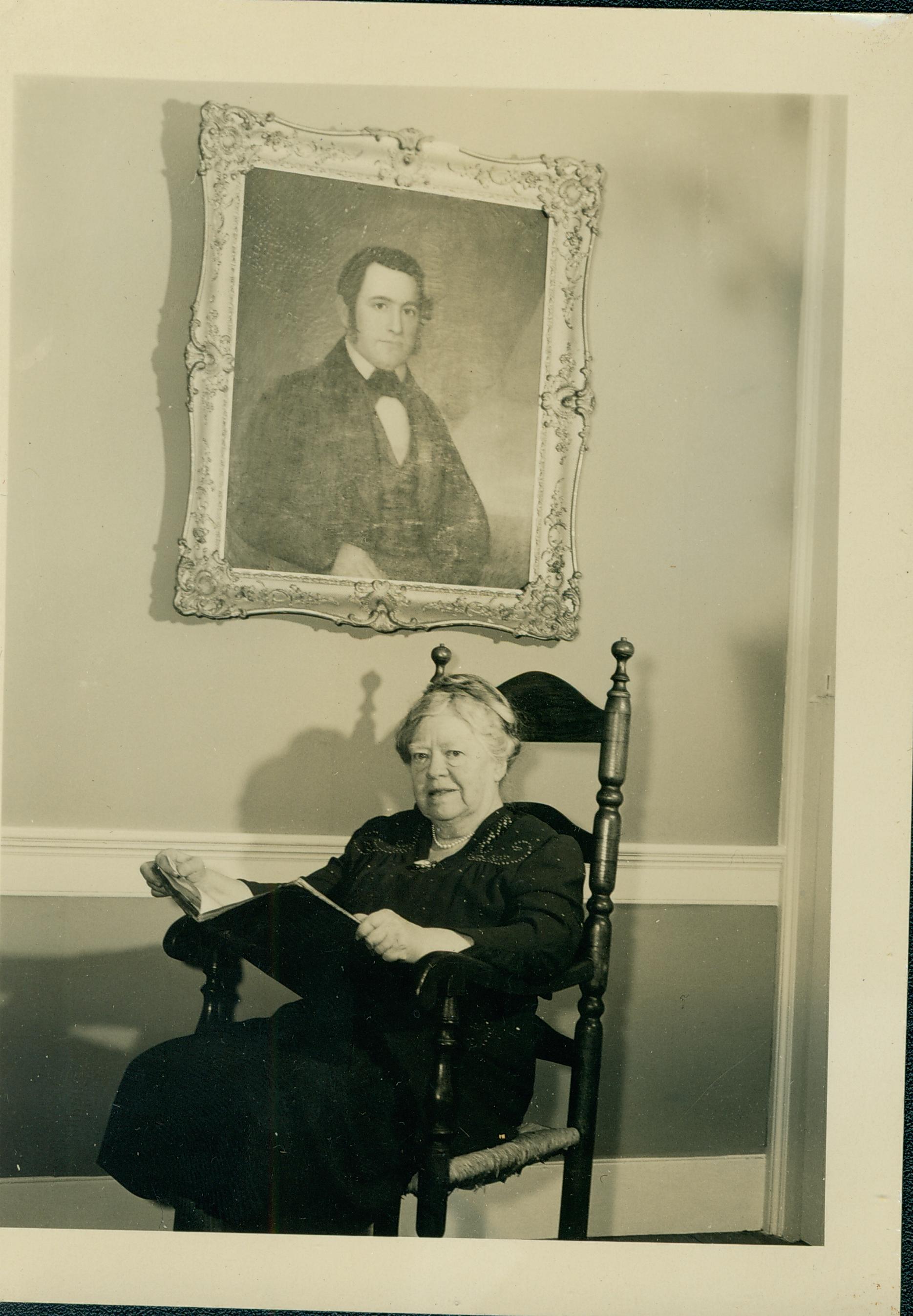
March is Women’s History Month. While we perpetuate and promote the legacy of Maria Mitchell, our namesake, the Nantucket Maria Mitchell Association has been built upon the shoulders of some incredible women. I hope to continue to highlight them as I continue with this blog. Grace Brown Gardner, who I have mentioned before, is one of those women.


Grace Brown Gardner, educated in Nantucket public schools, earned a bachelor’s degree in botany from Cornell University and a master’s degree from Brown University. She taught first in the ’Sconset School, and then in New Bedford, Fall River, and at Framingham Normal School before returning to the island in 1942 after approximately forty years of teaching. She was an active member and a member of the boards of the Maria Mitchell Association, the Nantucket Atheneum, and the Nantucket Historical Association.


Grace Brown Gardner is renowned for her compilation of scrapbooks chronicling island life, history, and people – a lifelong occupation that began in her father’s newspaper office – and for her love of the island’s natural history. Today, the fifty-two scrapbooks are an important resource for anyone doing Nantucket research; they are housed in the Nantucket Historical Association’s Research Library. Other of her books and some ephemera are located at the Maria Mitchell Association’s Archives and Special Collections. Natural science specimens that she collected for the MMA reside in the MMA’s natural science collections in the Herbarium collection. This collection pre-dates the founding of the MMA in 1902 and is an important resource for MMA scientists, as well as Nantucket and off-island scientists. It is an extensive collection of dried, pressed plants which notes the locations and dates of their collections. It can also be used for sampling and for recreating the strain/variety of the plant – especially if it is endangered. I can open a folder with say, a sample of solidago (sorry, I picked a “boring” one, and find where it was picked from. I can go back to that site and see if it still exists there. That’s sort of a mundane example but I think it makes the point.


Gardner lived in her family home at 33 Milk Street – once known as the Big Shop – and the building that played host to the second anti-slavery meeting on Nantucket. It still exists today as a year-round home.


JNLF

Recent Posts
December 1, 2025
“If you don’t look, you don’t see. You have to go and look.” -Edith Andrews
By Jascin N. Leonardo Finger December 1, 2025
A past blog that I forgot I had written when I came across the letter written about below. Once I realized I had already written a blog about it, I decided it was worth re-blogging. Over Christmas, a neighbor of my Mother’s gave her a copy of something she came across while cleaning things up in her house. She thought my Mother would enjoy it and by the same token, my Mother thought that I would. Her note with it stated it proved she was as, “old as dirt.” She isn’t old as dirt. Believe me. The letter she had copied was from the War Production Board and dated December 16, 1942. It was, “written at the request of President Roosevelt,” who wanted to thank this young girl for her donation of a rubber tire. This was not any old rubber tire you see. It was a pure rubber tire – very much needed for the war effort – from one of her toy airplanes and measured not more than half an inch or so in diameter. This young girl was distressed that everyone else, including in her family, was assisting in the war effort and that she wasn’t. So when she discovered the tire was rubber, she asked her mother to send it to Washington, DC. Which, obviously, her mother did do. What does this have to do with Maria Mitchell you wonder? Well, it makes me think of collections and saving things. You have your own collections and archives at home – your family papers and photographs, your books (aka special collection books). These are valuable to your family and its history. They help you see what and who came before you and how your family became a family. What they endured. How they got to where they did and how where they came from helped, in part, to get you to where you are today. And then, these papers and books are important for the larger community. We learn from our past and our collective past – and these items help us do that. Scores of researchers use Maria Mitchell’s papers and those of her family every year. Not everyone is doing research on the family – they can be doing research on astronomy or some science-related matter, someone whom Maria or her family knew. The possibilities are endless. So, from this little letter, I know a young girl in Connecticut contributed to the war effort and what she gave. I know that rubber (not that I didn’t already but you get the idea) was important to the war effort in some way. I also know that many people contributed to the war effort and this was just one simple way to do it. I know she had a toy that had rubber components. And as a young girl in 1942, she was playing with toy airplanes. And I know that the war effort was all consuming to the point that a small child wanted to make sure she found a way to help too while seeing her family members helping. Your paper is important. Always find a venue for these items if you no longer want them. They will help us to better understand our world – past and present. JNLF P.S. Remember that every donation, every gift to someone in need, matters. No matter how small it is – or you think it is.
By Jascin N. Leonardo Finger November 24, 2025
Nov. 15, 1876. Congress. The Woman’s congress met in Philadelphia. The papers were numerous and excellent. Mrs. Howe’s on paternity the most successful. Grace Anne Lewis, ABB [Antoinette Brown Blackwell], Mrs. Diaz [Abby Morton Diaz], Mrs. Perus and others had very good papers. The newspaper treated us very well. The institutions opened their doors to us, the centennials gave us a reception. But – we didn’t have a good time! 1 st . The Hall was a very bad one to speak in, almost no one could be heard. 2 nd . The Women’s committee of Philadelphia led by Mrs. Bartol, attempted to control us . . . Several women protested via passed note to Maria Mitchell that they did not want to discuss suffrage for women at the Congress. Really? Why were they even there then? Apparently, they were afraid (I can see that). Ultimately, papers were presented and discussed concerning women’s suffrage. They even had people oppose the nomination of Julia Ward Howe as President. A small group of women offered up other nominations with one finally saying that the new president needed to be from the west, implying there was too much northeast representation on the board. Maria was not pleased in the least. Ultimately, Julia Ward Howe became President. JNLF
Show More