Rachel Bowyer to Speak as Featured Guest for Nantucket Maria Mitchell Association’s Science Speaker Series
Website Editor • March 24, 2021

Update: Due to unforeseen circumstances, we are rescheduling the Wednesday, March 24 Winter Science Speaker Series talk. The new date will be Wednesday, March 31 at 7pm. The registration link for the event remains unchanged.


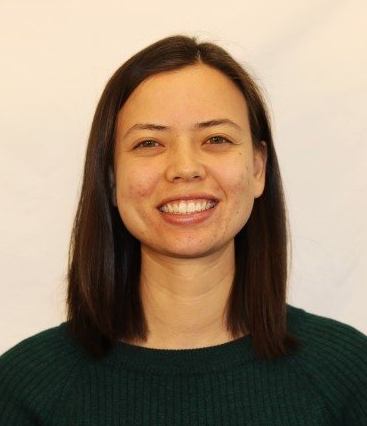
On March 31st at 7pm, the Nantucket Maria Mitchell Association (MMA) is hosting a live lecture entitled, “Hidden Patterns in Galaxy Motions: What They Can Tell Us About the Universe” presented by former MMA National Science Foundation Research Experience for Undergraduates (NSF-REU) intern, Rachel Bowyer. This talk is part of our FREE Winter Science Speaker Series and will be held via Zoom.


Galaxies move at hundreds of miles per second through space, yet they are so far away, that they appear stationary to us on Earth. However, recent advancements in observing techniques have made it possible to observe the motion of hundreds of thousands of galaxies all across the sky. These observations are revealing complex, streaming and swirling patterns in galaxy motions that are rich in information about our universe’s formation and evolution. Specifically, these motions can tell us about the formation of structure in the universe and about primordial gravitational waves. In this talk, Bowyer will discuss the emerging field of “real-time cosmology” and how patterns in galaxy motions can be used to study the early universe.


Bowyer is an Astrophysics graduate student working towards her Ph.D. at the University of Colorado, Boulder. She researches cosmology and the early universe, specifically, what observed galaxy motions can tell us about gravitational waves and the formation of structure in the universe. Recently, Bowyer was awarded the prestigious Chambliss Astronomy Achievement Award for the presentation of her work at the American Astronomical Society meeting. Bowyer began her research career at the Maria Mitchell Observatory in the summer of 2017. At the MMO, she worked on a project to map the dark matter structure in galaxy clusters using the effects of gravitational lensing. Aside from research, Bowyer enjoys undergraduate teaching and is interested in using the principles of Universal Design to develop accessible curriculum. Bowyer is committed to mentoring young scientists, and frequently serves as a mentor to women and minority undergraduates.


To register for this event, please follow the link below:

https://zoom.us/webinar/register/WN_cy3o0mxkTAmSw59qVtmSCA


This is the last lecture in our Winter Science Speaker Series. Please visit our YouTube channel to watch the previous speakers and stay tuned for our Summer Speaker Series beginning in June.

https://youtube.com/playlist?list=PLnsCpmupLX6juHyeaVGydunBH6R58j8hS


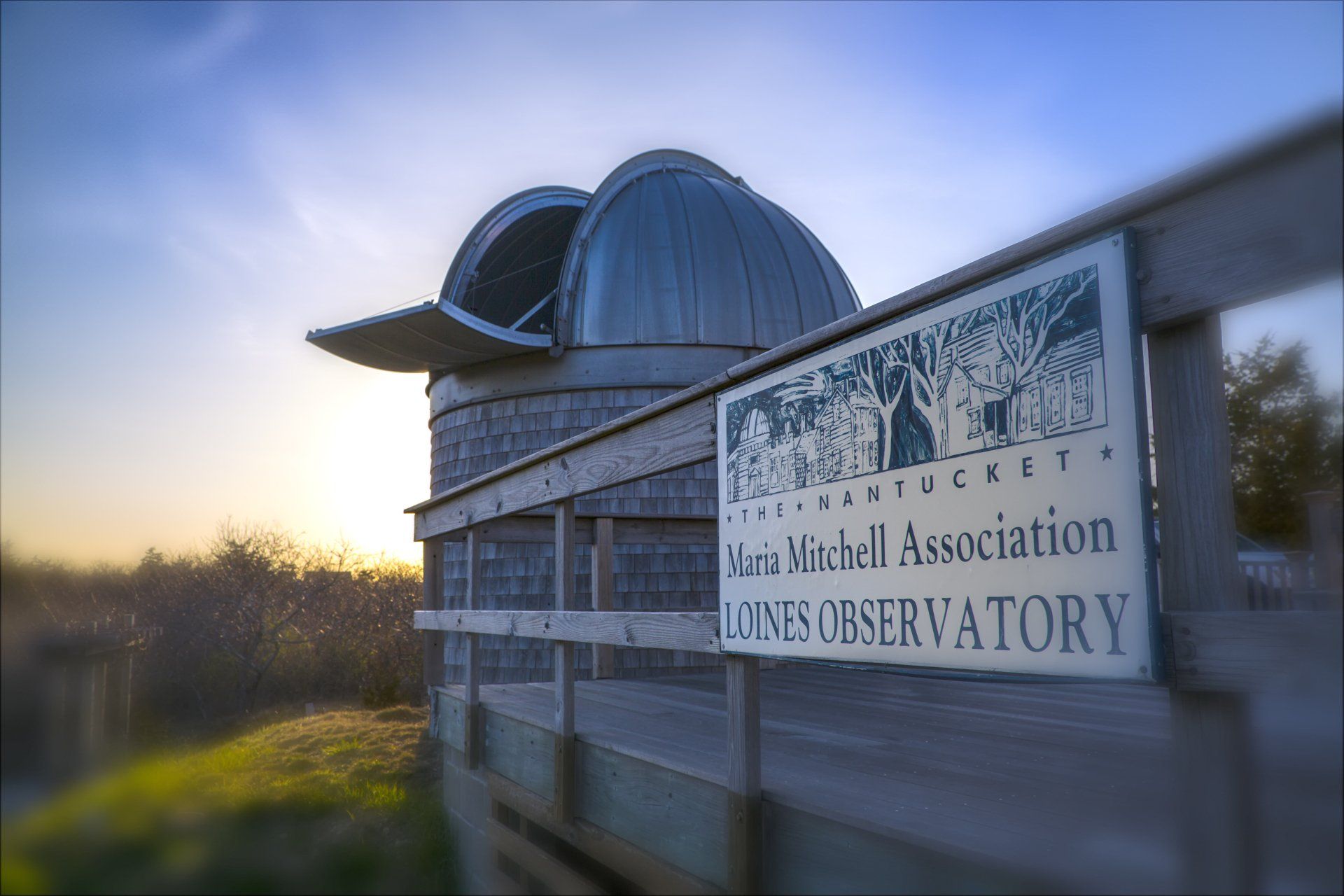
This series is organized by the Maria Mitchell Association, a private non-profit organization. Founded in 1902, the MMA works to preserve the legacy of Nantucket native astronomer, naturalist, librarian, and educator, Maria Mitchell. The Maria Mitchell Association operates two observatories, a natural science museum, an aquarium, a research center, and preserves the historic birthplace of Maria Mitchell. A wide variety of science and history-related programming is offered throughout the year for people of all ages.

For Immediate Release

March 24, 2021

Contact: Kelly Bernatzky, MMA Development Associate

kbernatzky@mariamitchell.org

Recent Posts

By Jascin N. Leonardo Finger May 11, 2026
A repost – with my apologies – from last year. It started budding the week of April 30 this year. This is what our landscaper for the MMA calls it. “The ancient vine.” He tells the people who work for him not to touch the “ancient vine.” I have probably made him – and all of them – terrified of it. I am even terrified of it to some degree. I refer to the grape vine behind the Mitchell House that is supposed to be Peleg Mitchell Junior’s grape vine – Maria Mitchell’s uncle who inhabited the house from about 1836 to his death in 1882. It has two trunks but one died several years ago. Because of that, each year I try to root shoots. It’s fairly easy to do – when you cut back the vine in late fall/early winter. I have had success but not success protecting the shoots I baby all winter from bunnies and other critters once I plant them – try as I might. I started doing this when the one trunk died – I was PANICKED! The landscaper stays away because I have told him if anyone is going to accidentally harm or worse yet, kill, this grape vine it would be me so I only have myself to blame. So each November/December – once ALL the leaves have fallen off – I climb my ladder and quietly, carefully, and fearfully cut back the stems typically to two buds. I have been somewhat successful in spurring grape production – and these grapes attract some amazing birds in the fall. It takes me some time – and I pretty much hyperventilate the entire time – and then, I stare at it all winter. Passing under it multiple times a day to reach my office. Hoping, and yes, praying, it will come out in the spring. It’s a late budder so just recently the buds started to show themselves – thank goodness! – and I was rewarded today (May 5, 2025) with this wonderful hot pink color on the edges of the leaves as they are uncurling. JNLF
By Jascin N. Leonardo Finger May 4, 2026
May 6, 1878 Between the clouds, Miss Spalding obtained 7 photographs of Mercury on the Sun. It is comfort to me to be able to plan and do a new kind of work. The large telescope worked better than usual, Clark having just been to the Observatory. Clark, as in Alvan Clark, a man who would become the premier telescope maker in America and who built Maria Mitchell’s 5-inch Alvan Clark refractor that she purchased from him (after working with him to build it per her specifications) with money gifted to her from “The Women of America” led by Elizabeth Peabody. More than likely, it is this telescope she is referring to as she did use it in the Vassar College Observatory with her students – and it is also taking center stage in photographs, along with her (first her father’s) Dolland telescope.  Maria had decided she would photograph the Sun on every clear day, and this was one of those results. She would use these images, with her students, to study sun spots and their changes. With her students, Maria would photograph the transit of Mercury as noted above. She would also photograph the transit of Venus a few years later with her students. JNLF
By Jascin N. Leonardo Finger April 27, 2026
And with it, some of the heirloom daffodils I purchased for the Mitchell House last fall. A place was recommended to me by two longtime friends of the MMA and gardeners extraordinaire. It is called Old House Gardens. I ordered a small amount as we now have a plethora of voles on Vestal Street – I believe I complained about them here last year. They won’t eat daffodils so I got a few of “Butter and Eggs” (1777) and “Conspicuus” (1869) as either of these could have appeared in William Mitchell’s gardens. They were not listed in a letter from John Quincy Adams that I have mentioned before. But, Adams was not here visiting the Mitchell family when the daffodils would have been in bloom. The one pictured here is “Butter and Eggs” not completely unfurled. JNLF
Show More