Recap of the Maria Mitchell Association at the 237th Meeting of the American Astronomical Society
Regina Jorgenson • February 2, 2021

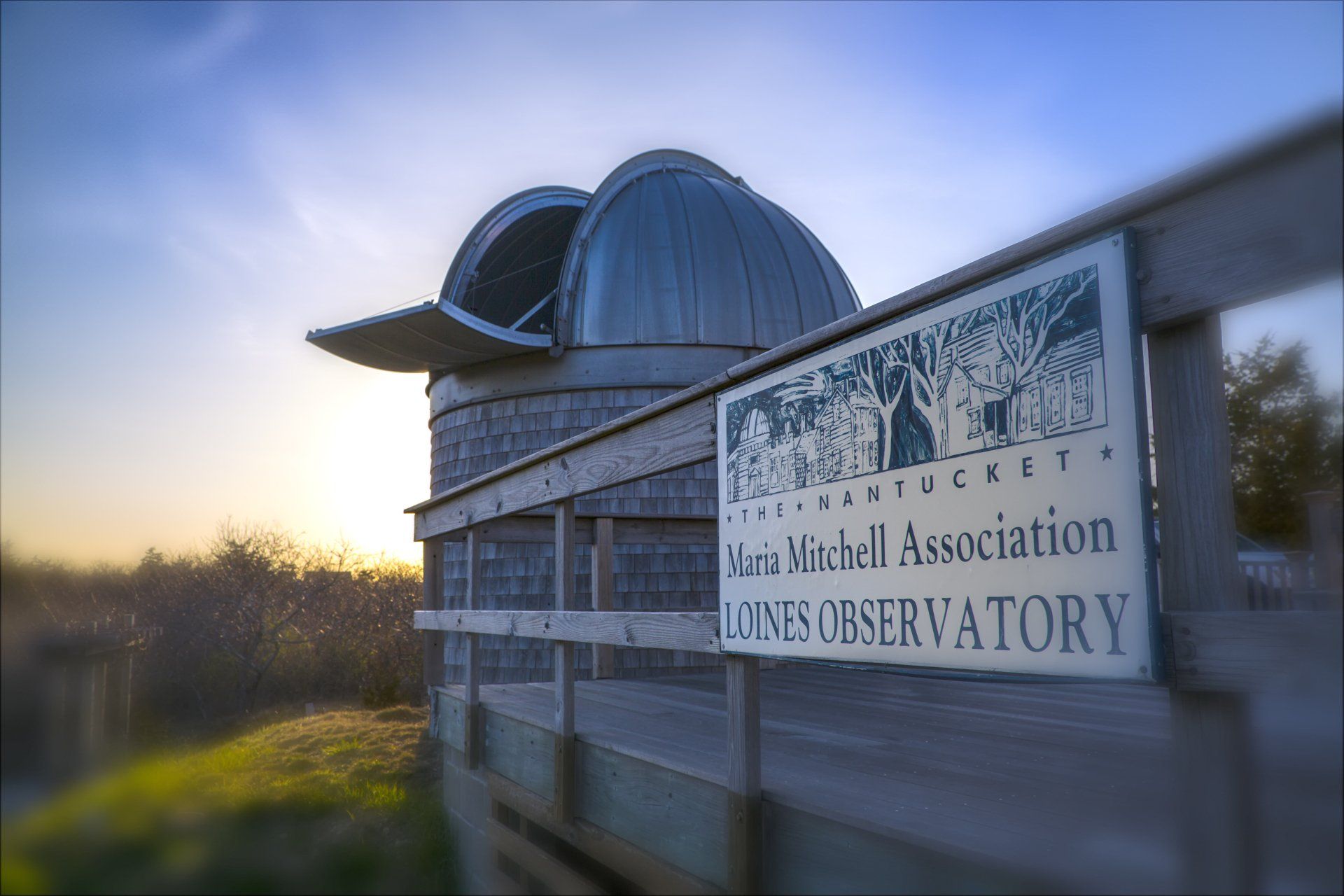
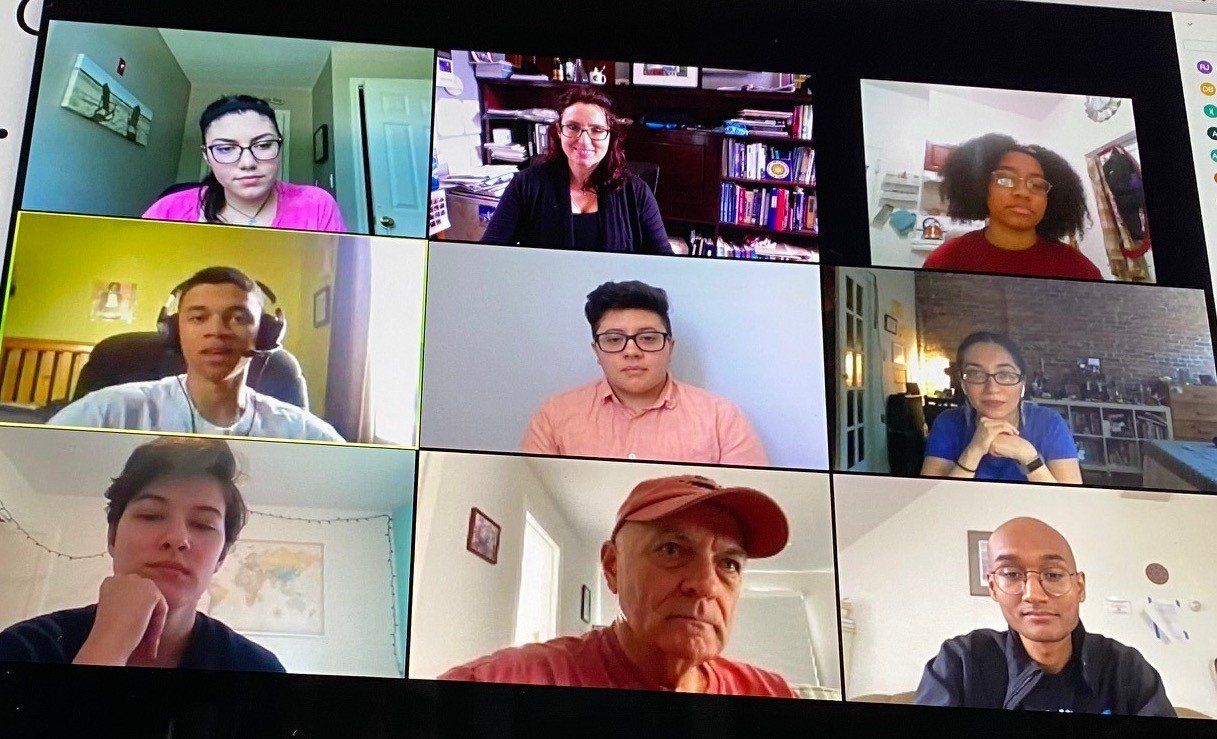
The Nantucket Maria Mitchell Association is proud to recognize and congratulate its six summer 2020 National Science Foundation Research Experiences for Undergraduates (NSF-REU) interns (virtual for 2020) for their wonderful job presenting their research at the recent meeting of the American Astronomical Society (AAS). The 237th meeting of the AAS took place on January 11-15, 2021 and in light of the COVID-19 Pandemic, the meeting was held virtually. Over 3,000 astronomers from around the world came together to network and share the news of their latest discoveries. As is customary, the Maria Mitchell Observatory (MMO) brought its six NSF-REU interns to the meeting to present their summer research findings. In a continuation of the long tradition of excellence in research and mentoring at the Maria Mitchell Observatory, each intern presented their work, covering a range of topics from exoplanets and X-ray studies of stars, to seeking out the missing matter in the Universe and understanding how black holes devour stars that wander too close. Each intern presented their research in the format of an iPoster (interactive poster) as well as a five-minute talk followed by questions. The interns did an exceptional job and the Maria Mitchell Association is proud to be represented by such an astounding group of young researchers! A complete list of all of the MMO intern presentations follows below. 


Other highlights from the meeting included: a new exoplanet confirmed orbiting around a triple star system; a rocky planet found orbiting a very old star; the discovery that the disk of our own Milky Way Galaxy is warped; a new effort to use distant pulsars as ultra-precise clocks to measure the generalized gravitational wave background; and the discovery of the most distant quasar yet observed. For more on this last story, listen to Dr. Jorgenson’s interview on WCAI’s Looking Skyward (https://www.capeandislands.org/post/looking-skyward-most-distant-quasar). In addition, there were multiple interesting panels and discussions on equity, inclusion, and diversity efforts, many of them emphasizing and demonstrating the impact that programs such as the MMO’s NSF-REU and post-bac fellowship programs are having on increasing, supporting, and retaining underrepresented groups in astronomy. 


The following is a complete list of the MMO’s REU intern presentations:


  • Sharpening NuSTAR X-ray Images of Pulsar Wind Nebula G21.5-0.9
  • Devon Barros (Bridgewater State University)


  • First Millimeter Flares Detected From Epsilon Eridani With ALMA
  • Kiana Burton (Temple University)


  • Search for X-rays from RV Tau Variable Stars
  • Sarah Graber (Columbia University)


  • Using TESS Data to Search for Transiting Exoplanets Around White Dwarfs
  • Alex Granados (Wellesley University)


  • Untangling the Cosmic Web: VLT/MUSE Observations of FRB Host Galaxy 180924
  • Andrea Mejia (CUNY- Hunter College)


  • Systematic Classification of Tidal Disruption Event Light Curves from the Zwicky Transient Facility
  • Natalia Villanueva (Harvard University)

For Immediate Release

February 2, 2021

Contact: Kelly Bernatzky, MMA Development Associate

kbernatzky@mariamitchell.org

Recent Posts

By Jascin N. Leonardo Finger March 9, 2026
I have posted this during Women’s History Month before but because it is March and again Women’s History Month, I think it’s worth repeating. It’s clever and helps to tell an important story in women’s history while giving it a bit of a 21 st century twist. It comes via the National Women’s History Project. JNLF
March 6, 2026
NANTUCKET, MA—The Maria Mitchell Association (MMA) invites the community to take part in an important conversation on owl preservation. The MMA will host a free virtual panel bringing together specialists in wildlife conservation to discuss the challenges these remarkable birds face today on Nantucket and beyond. This free presentation will take place Wednesday, March 18 from 6 – 7pm on Zoom. Owls are an essential part of Nantucket’s delicate island ecosystem. As natural predators, they help keep rodent populations in balance and serve as important indicators of environmental health. In recent years, however, growing threats—including the spread of Avian Influenza and the widespread use of rodenticides— have raised serious concerns for local owl populations and the broader bird community. This timely discussion will explore how these issues are affecting owls across the region and what they may mean for Nantucket’s wildlife and landscape. Panelists will share current research, discuss conservation efforts, and offer practical ways the community can help protect these iconic nocturnal hunters. By bringing together scientists, conservationists, and community members, the event aims to foster awareness and collaboration around protecting Nantucket’s natural heritage. Residents, nature enthusiasts, and anyone interested in the island’s wildlife are encouraged to join the conversation. The discussion will feature acclaimed naturalist and author, Scott Weidensaul, a Pulitzer Prize finalist for his book, Living on the Wind. He is also the author of A World on the Wing. A contributing editor to National Audubon and a longtime columnist for Bird Watcher's Digest, Weidensaul is a Fellow of the American Ornithological Society and co-founder of Project SNOWstorm, which tracks snowy owl movements through satellite telemetry. Joining Weidensaul will be Susan Baker of the Chicago Ornithological Society and the Chicago Bird Alliance Rodenticide Committee; Meaghan Q. Sinclair, a Mass Audubon Certified Field Naturalist, wildlife photographer, co-founder of Save Concord Wildlife, and member of the Mass Audubon Governance Council; Heather Packard, Community Organizer with Mass Audubon’s Policy & Advocacy team and manager of Climate and Nature Champions; Gwen Shipley, a Council Co-Leader and Climate and Nature Champion with Mass Audubon; and Ginger Andrews, the MMA’s Field Ornithologist. Together, these distinguished experts bring deep scientific expertise, conservation leadership, and extensive field experience to a timely and engaging discussion. This event will be held via Zoom. Pre-registration is required. To register for the free, virtual event, use the registration link: https://us06web.zoom.us/webinar/register/WN_9EGqyJ3XT06N8-GU14iuog#/registration The Science Speaker Series is generously sponsored by the Maria Mitchell Association’s lead sponsor, Bank of America. Image Credit: Snowy Owl by the late Greg Hinson. The Maria Mitchell Association was founded in 1902 to preserve the legacy of Nantucket native astronomer, naturalist, librarian, and educator, Maria Mitchell. After she discovered a comet in 1847, Mitchell’s international fame led to many achievements and awards, including an appointment as the first professor of astronomy at Vassar College. Maria Mitchell believed in “learning by doing” and today that philosophy is reflected in the MMA’s mission statement, programs, research projects, and other activities. The Maria Mitchell Association operates two observatories, a natural science museum, an aquarium, a research center, and preserves the historic birthplace of Maria Mitchell. A wide variety of science and history-related programming is offered throughout the year for people of all ages. ###
By Jascin N. Leonardo Finger March 2, 2026
It’s sort of funny what Mother Nature does. Granted, in this case, she had a little help by shovel or plow. But as I made my way up Vestal Street a week ago or so, after the first round of eight inches of snow or so, I noticed this ice shape on the front stoop of the Mitchell House. To me, it looks like a whale with its tail up in the air! I think it’s sort of appropriate for this front stoop so I decided to share! JNLF
Show More